Time | Programme |
|---|---|
7:45–8:15 AM | Pickup and transfer to the national park centre. |
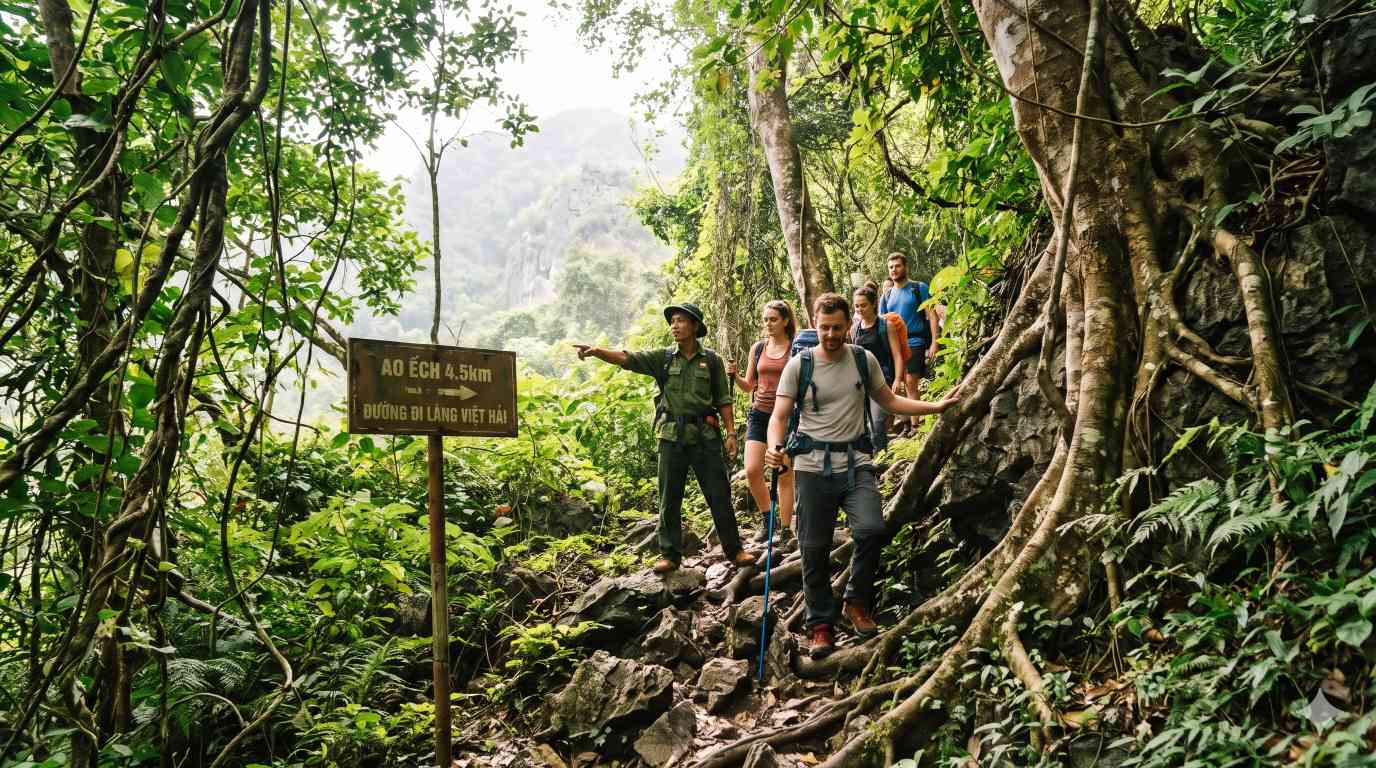
8:45 AM | Begin the forest trek from the park headquarters. |
10:00–10:30 AM | Break at Frog Pond, then continue towards Viet Hai. |
12:30–1:00 PM | Lunch, village relaxation and the listed fish foot massage activity. |
2:00 PM | Cycle to the village dock or choose an optional electric minibus. |
2:30 PM | Board the boat and cruise into Lan Ha Bay. |
3:00 PM | Kayak, or relax by the beach and swim where permitted. |
4:30 PM | Cruise back towards Beo Harbour, passing Cai Beo Floating Village. |
Around 5:00 PM | Return transfer to central Cat Ba town; tour ends. |
The day starts with the transfer from town to the park. At the entrance, meet your guide, complete the entry arrangements and prepare for the forest crossing. Use this opportunity to adjust your backpack, check your water and ask about the terrain ahead.
Cat Ba National Park was established in 1986 and protects both land and marine environments. This tour follows a forest-to-village route before continuing onto the bay; it does not visit every ecosystem or attraction within the protected area.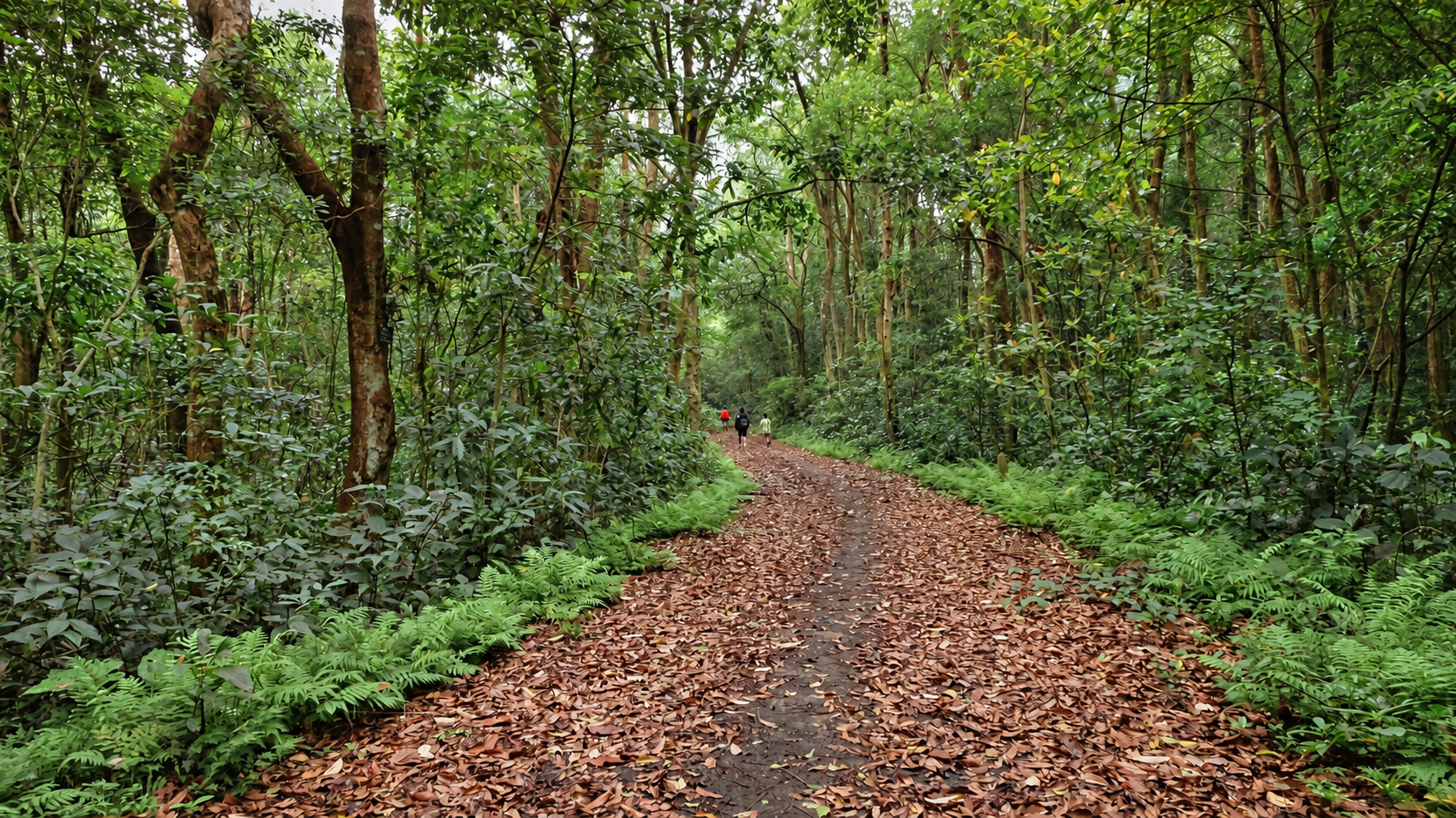
Once on the trail, the forest becomes the main experience rather than simply the background. Watch for roots spreading around rock, climbing plants reaching towards light and the contrast between shaded hollows and more exposed ground. Pausing to notice these details makes the walk more rewarding than counting kilometres alone.
Full-day routes towards Ao Ech and Viet Hai are commonly described using the local names Ang Vat, May Bau and Ang Phay. These names help explain the succession of uphill and downhill sections encountered on longer crossings. They should not be read as three guaranteed summit platforms with unobstructed panoramas. The guide will confirm the path used on your departure and where it is appropriate to stop.
A comfortable rhythm matters more than speed. Some sections require careful foot placement, especially when the rock or roots are wet. Keep space between walkers on steeper ground and save energy for the descent towards the village.
Ao Ech, or Frog Pond, is one of the most distinctive places on this journey. Within the limestone landscape, water collects in a forest depression, supporting a wetland setting that looks different from the slopes you have crossed.
The characteristic trees are known locally as Va Nuoc, identified in the biosphere reserve’s documentation as Salix tetrasperma, a member of the willow family. Looking at their trunks and roots is a useful way to understand how vegetation changes with water conditions.
The scene is seasonal. Higher water can create reflections between the trees; during the dry season, the water retreats and more of the wet forest floor becomes visible. A photograph of a flooded pond is therefore not a promise of the same appearance on every visit.
Take a break on the permitted route and let the guide explain what you are seeing. Ao Ech is a nature stop, not a swimming lake or a place to leave the trail to search for animals
After Ao Ech, the journey continues through the forest towards Viet Hai. Some operators describe the final hill section as Doc Dai. Its inclusion and the local names used should be confirmed for the selected route; the core destination remains Viet Hai Village.
The transition into the valley is one of the day’s most satisfying moments. After concentrating on roots and rocks, you begin to see a landscape shaped by everyday village life. Keep enough energy for this final walking section rather than assuming the hard work ends at the pond.
Lunch provides a proper pause after the forest crossing. Viet Hai sits within a valley enclosed by limestone hills, and the change from walking trail to village roads makes it a natural place to rest.
Look beyond the usual village photograph. Homes, gardens and the services offered to visitors show a community living within this landscape. Local people’s involvement in meals, transport and tourism helps connect the visitor experience with daily livelihoods. A short stop is not a staged farming demonstration or automatic access to private homes, so ask before entering or taking close photographs of residents.
The programme includes the listed fish foot massage, which you can choose to try during the break. It is a leisure activity rather than a medical treatment. Tell us about dietary requirements before the tour so lunch arrangements can be checked.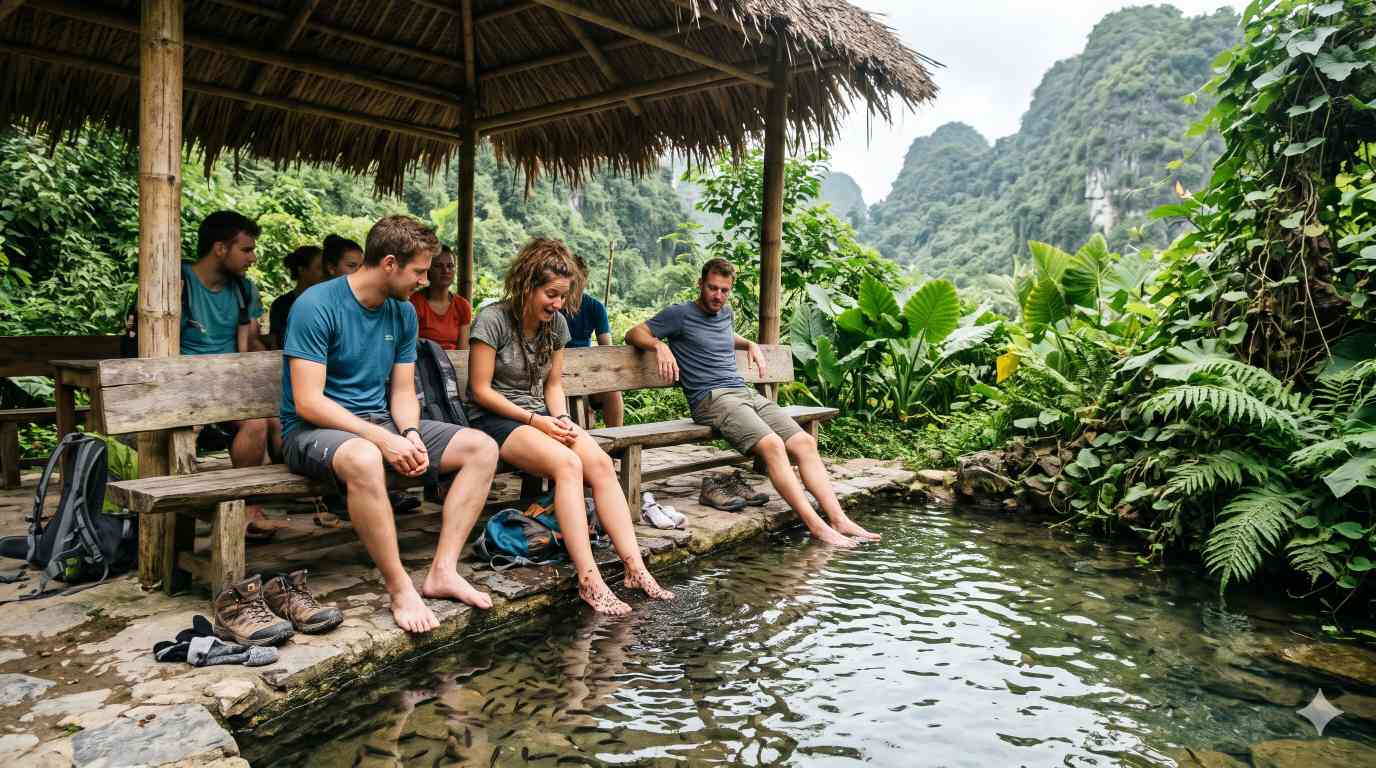
At approximately 2:00 PM, continue towards the village dock by bicycle. This section changes the pace again: rather than negotiating forest steps, you follow the village-to-harbour road towards the boat connection.
Check the bicycle and brakes before setting off and ride within your ability. The journey should fit the guide’s schedule; it is not an invitation to separate from the group. An electric minibus may be available as an alternative. Its availability and charge must be confirmed separately for this trekking programme.
The VND 50,000 Viet Hai add-on advertised for certain cruise packages is not automatically the charge for this trekking transfer. Ask for the option attached to your actual booking.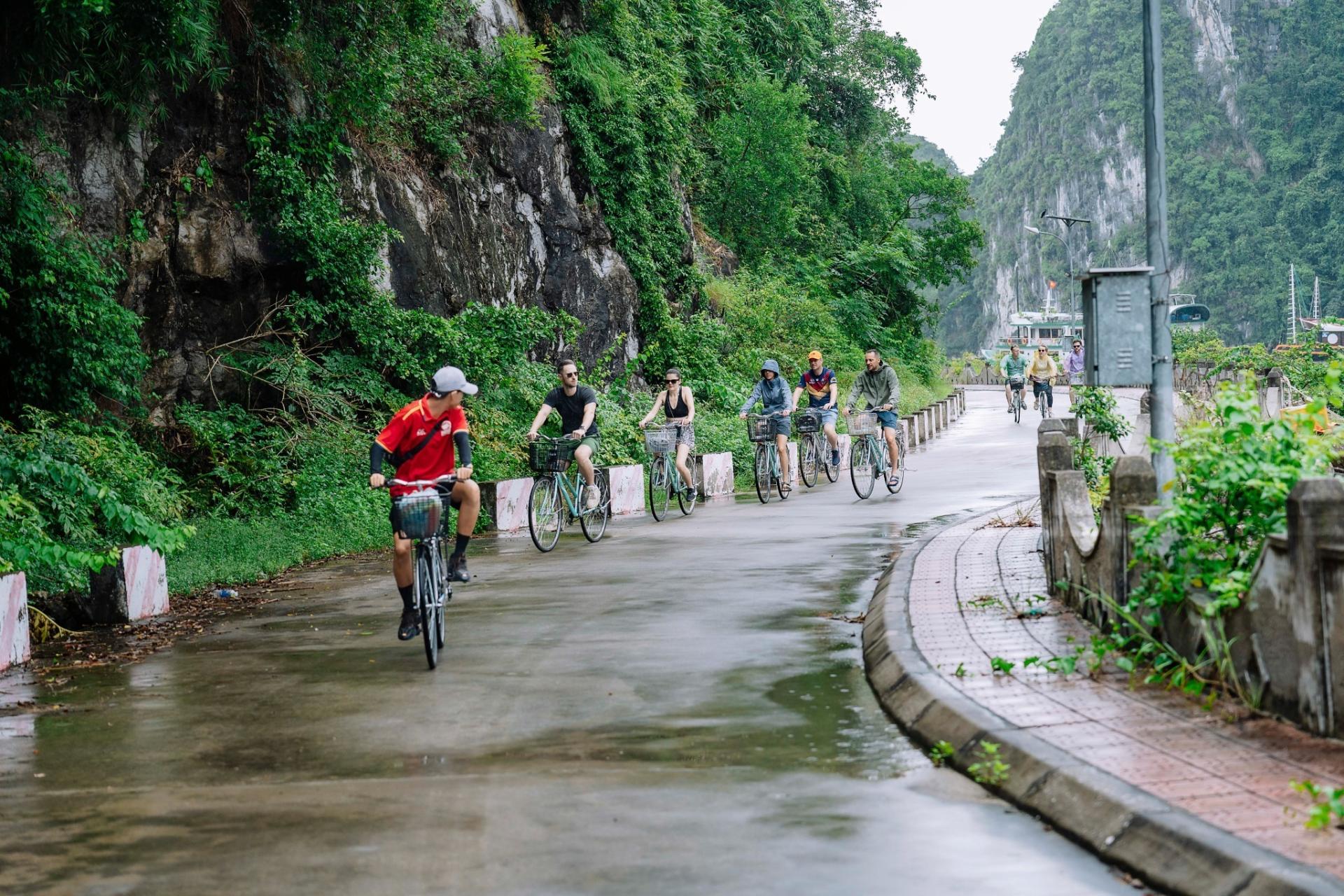
Board the boat at approximately 2:30 PM and continue into Lan Ha Bay. The forested limestone hills you experienced on foot now form the backdrop to a journey on the water. This is also a chance to rest your legs before choosing how actively to spend the afternoon.
Notice how the coastline meets the bay: steep rock, vegetation on ledges and channels between islands create a very different view from the inland trail. The cruise is part of the experience, not just transport back to town.
Around 3:00 PM, enjoy the scheduled water activity. Kayaking brings you closer to the shoreline, while an available swimming or beach stop offers another way to finish the active part of the day. Follow the guide’s briefing and use the designated area.
The precise paddling location and any beach landing depend on the booked departure and conditions. This programme does not promise Bright Cave, Dark Cave, Monkey Island or Ba Trai Dao unless those places are explicitly confirmed in your booking. Choosing a realistic activity stop leaves more time to enjoy the water than trying to add unrelated destinations.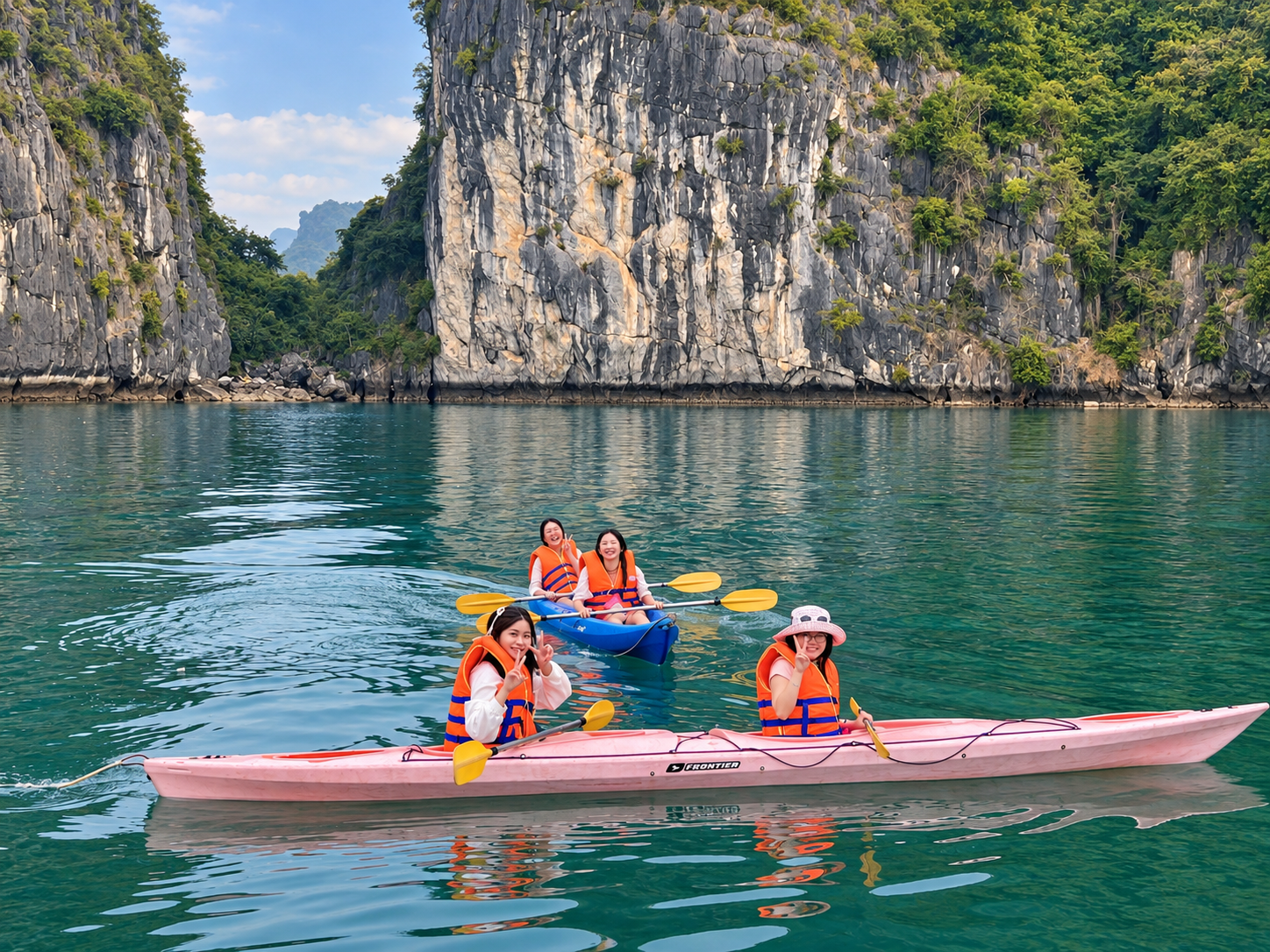
Around 4:30 PM, cruise towards Ben Beo, passing Cai Beo Floating Village. Look for floating homes, fishing boats and aquaculture structures: the bay is a working environment as well as a scenic attraction.
The Cai Beo area also has an archaeological history, but today’s floating houses should not be confused with the age of the prehistoric settlement. Seeing the village after walking through the island’s interior gives the day a clear connection between forest, land-based communities and life on the water.
The planned transfer back to central Cat Ba town brings the tour to a close at approximately 5:00 PM. Keep some flexibility afterwards rather than booking a tight onward connection.
You do not need botanical expertise to enjoy this forest. Start with the differences you can see: broad leaves and smaller understorey plants, trunks rooted beside rock, climbing stems and the wetland trees around Ao Ech. The following names and groups provide context; they are not a promise that every species grows beside the exact path used that day.
Kim Giao is another important plant name associated with Cat Ba, but the well-known Kim Giao–Ngu Lam walking area belongs to a different route. We do not add it to this full-day itinerary simply to make the plant list longer. Do not pick plants, taste unidentified leaves or collect souvenirs from the forest.
Bird calls, insects and movement in the vegetation can make a short pause surprisingly interesting. Watch quietly from the trail, let your eyes adjust to the shade and ask the guide to help identify anything observed. Hearing wildlife can be part of the experience even when the animal stays out of sight.
Butterflies and other insects are worth watching for in suitable conditions. Squirrels, monkeys and forest birds are mentioned in local descriptions of this crossing, but whether you see them depends on the day. A quiet group may notice more than a noisy one, though no viewing method guarantees an encounter.
At Ao Ech, local accounts describe frogs, fish and freshwater crabs. These are associated with the wetland rather than displayed for visitors; water level and visibility affect what can be observed from the path. Do not approach the water or disturb the habitat to look for them.
The Cat Ba langur, Trachypithecus poliocephalus, is a critically endangered primate associated with the archipelago. Its conservation is an important part of Cat Ba’s story, but this walking tour is not a dedicated langur-watching excursion. Book for the forest journey and landscape, with wildlife as a possible addition.
We do not advertise a fixed animal-viewing location or a reliable time for seeing langurs, civets or other elusive mammals. Keep food packed away, never feed animals and leave any encounter to the guide’s judgement.
All times are approximate. The Ao Ech break shown below follows our supplied programme; it should not be treated as a guaranteed arrival time for every forest route. A longer route or slower walking pace may move this stop closer to midday. Your confirmed departure and the guide’s assessment take priority.
7:45–8:15 AM — Pickup in central Cat Ba and transfer to the national park.
8:45 AM — Begin the guided forest trek from the park headquarters.
10:00–10:30 AM — Indicative Ao Ech break in the supplied programme; timing varies with the actual trail and group pace.
12:30–1:00 PM — Planned lunch arrival window in Viet Hai, followed by rest and the listed village activity.
2:00 PM — Cycle towards the village dock, or use an optional electric transfer if arranged.
2:30 PM — Board the boat for Lan Ha Bay.
3:00 PM — Kayaking, or the available beach and swimming opportunity.
4:30 PM — Return cruise towards Ben Beo, passing Cai Beo Floating Village.
Around 5:00 PM — Return transfer to central Cat Ba town.
Choose this tour if you want the journey through the island to be a central part of your visit. The combination of forest, wetland, village roads and bay scenery provides a broader experience than a short out-and-back walk.
Cat Ba’s archipelago became a UNESCO biosphere reserve in 2004 and was added to the Ha Long Bay World Heritage property in 2023. These are designations for the wider landscape, not individual awards for each stop. On this trip, the transition from limestone forest to coastal scenery helps make that landscape easier to understand.
If your priority is a short viewpoint walk and a cave, compare our half-day trek instead. Ngu Lam Peak, Trung Trang Cave and Hospital Cave are not included in this full-day programme.
Included: scheduled central-town pickup and drop-off; professional guide; entrance fees; scheduled boat transport; one large bottle of water; lunch in Viet Hai; bicycle use; the listed fish foot massage; kayaking and an opportunity to swim where conditions permit.
Excluded: extra drinks, personal expenses, tips and services not specified. Confirm any electric-minibus alternative separately. Do not assume that inclusions advertised by another operator apply to this departure.
Wear hiking shoes with dependable grip and bring a compact daypack, insect repellent, rain protection, sun protection, swimwear and dry clothing. Carry sufficient drinking water for your needs; an included bottle should not be treated as a guarantee that you will need no additional water.
Expect repeated climbs, uneven limestone and a more sustained effort than the half-day walk. Wet conditions can make the descent demanding. Tell us about your walking experience and any mobility or stamina concerns before booking. Families should check the chosen operator’s age and suitability requirements rather than assuming all children can join.
Pickup in central Cat Ba town is free. In Xuan Dam, a free shared pickup may be available when enough guests travel together on the same departure. Contact us to check; it is not automatic. If travelling alone, allow approximately VND 50,000–100,000 each way. We will confirm the charge and return arrangement before booking.
Send your travel date, group size, children’s ages and hotel location to Lan Ha Bay Kayaking on WhatsApp +84 353 166 000: https://wa.me/84353166000. Tell us whether you prefer cycling or need an electric-transfer option so we can confirm the complete arrangements for your day.
Website: https://www.lanhabaykayaking.com

